
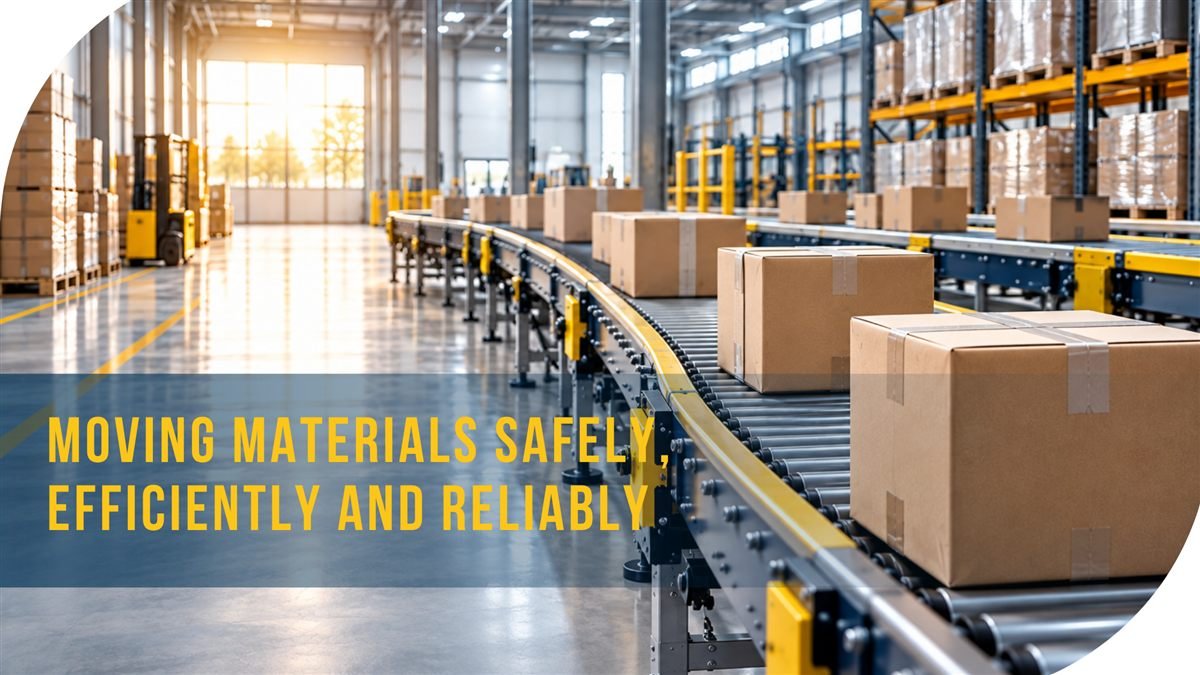
Moving Materials Safely, Efficiently and Reliably
Material movement is an essential part of manufacturing, warehousing, logistics, and other industrial operations. However, manual material handling can expose employees to risks such as repetitive lifting, carrying heavy loads, awkward movements, and unnecessary movement through busy work areas.
A properly designed conveyor system can help businesses create a safer working environment by reducing manual handling and providing a more controlled way to move products and materials.
In this article, we explore how conveyor systems improve workplace safety and the key factors businesses should consider when implementing a conveyor-based material handling solution.
Why Workplace Safety Matters in Material Handling
Material handling activities can involve lifting, carrying, pushing, pulling, and transferring products between different locations. When these activities are performed manually and repeatedly, they can increase physical strain and create opportunities for workplace accidents.
A well-designed industrial conveyor system can reduce the need for employees to manually transport materials across production floors, warehouses, and other operational areas.
Common Material Handling Safety Challenges
Businesses may encounter several safety challenges during manual material movement, including:
- Repetitive lifting and carrying
- Handling heavy or bulky materials
- Awkward bending and reaching
- Congested work areas
- Manual movement over long distances
- Uncontrolled movement of materials
- Increased interaction between workers and material movement equipment
How Conveyor Systems Improve Workplace Safety
Conveyor systems can contribute to a safer workplace by reducing unnecessary manual handling and creating a more organized material flow.
Reducing Manual Lifting and Carrying
One of the key advantages of conveyors is their ability to move products from one location to another without requiring employees to carry them manually.
This can reduce physical strain associated with repetitive material movement, particularly in high-volume operations.
Minimising Repetitive Material Handling
Repeatedly moving products between workstations can take up significant employee time and involve repetitive physical movements.
A material handling conveyor can automate or simplify these transfers, allowing employees to focus on tasks that require greater attention and skill.
Improving Material Flow
An organized conveyor layout can create a defined path for materials.
This can help reduce unnecessary movement across busy production areas and contribute to a more structured workplace.
Reducing Manual Transportation Over Long Distances
Moving products manually over long distances can increase physical effort and create additional opportunities for handling-related incidents.
Industrial conveyor systems can provide continuous transportation between designated points, reducing the need for employees to manually carry materials across the facility.
Supporting Safer Workstation Design
Conveyors can be integrated into production and packaging workstations at suitable working heights.
This can help reduce unnecessary bending, reaching, and movement when transferring products between different stages of an operation.
Conveyor Safety Features That Support Safer Operations
The safety benefits of a conveyor system depend not only on the conveyor itself but also on its design, installation, operation, maintenance, and safety features.
Emergency Stop Systems
Emergency stop mechanisms allow operators to stop the conveyor quickly when an unsafe situation occurs.
Guards and Protective Barriers
Suitable guards can help prevent unintended contact with moving components such as belts, rollers, pulleys, and drive mechanisms.
Sensors and Safety Controls
Sensors can help detect products, monitor movement, and support automated control systems where appropriate.
Properly Designed Conveyor Layout
A well-planned layout can help maintain clear walkways and separate material movement from areas where employees regularly work or move.
Warning Signs and Safety Markings
Clear safety signs, labels, and markings can help employees identify potential hazards and understand designated operating areas.
Reducing Workplace Risks Through Automation
Automation can play an important role in improving material handling safety.
When conveyor systems are integrated with sensors, controls, scanners, or other automated equipment, material movement can become more predictable and controlled.
Automation can help reduce unnecessary manual intervention while supporting consistent movement of products between different stages of an operation.
However, automation does not eliminate the need for proper safety procedures. Employee training, machine guarding, inspections, maintenance, and safe operating practices remain essential.
Conveyor Systems Across Different Industries
Different industries can use conveyor systems to improve both material movement and workplace organization.
Manufacturing
Conveyors can transport components, work-in-progress materials, and finished products between production stages.
Warehousing and Logistics
Warehouse conveyor systems can reduce the amount of manual transportation required for cartons, packages, and other products.
Packaging
Conveyors can move products continuously through filling, packaging, labelling, inspection, and dispatch processes.
Food and Processing Industries
Depending on hygiene and application requirements, specialized conveyor systems can help move products through different processing stages.
How to Make a Conveyor System Safer
Simply installing a conveyor does not automatically make an operation safe. The system should be designed around the specific workplace, product, workflow, and operating conditions.
Conduct a Risk Assessment
Identify potential hazards associated with the conveyor, surrounding equipment, products, and employee interaction.
Provide Proper Machine Guarding
Moving components should be appropriately guarded wherever required to prevent unintended access.
Train Employees
Operators and workers should understand safe operating procedures, emergency controls, restricted areas, and reporting procedures.
Follow Preventive Maintenance Practices
Regular inspection and maintenance can help identify worn components, damaged guards, abnormal noises, or other issues before they become more serious.
Keep Work Areas Clear
The area around the conveyor should be maintained properly to prevent unnecessary obstructions and support safe employee movement.
Benefits of a Safety-Focused Conveyor System
A properly designed conveyor solution can provide several operational benefits while supporting workplace safety.
Key benefits include:
- Reduced manual material handling
- Less repetitive lifting and carrying
- More organized material flow
- Reduced unnecessary movement
- Better workstation ergonomics
- Improved operational consistency
- Potentially fewer material-handling-related risks
- Better integration with automated processes
Note: Conveyor systems should be designed and operated according to applicable safety requirements and the specific risks of the workplace. A conveyor can reduce certain hazards, but it does not eliminate workplace risk by itself.
Why Choose Excel Conveyors?
At Excel Conveyors, we understand that conveyor systems need to support more than just material movement. The design should consider product characteristics, workflow, available space, operational requirements, and workplace safety.
Our conveyor solutions can be designed for different industrial material handling requirements, helping businesses create more organized and efficient material movement processes.
Whether you require a belt conveyor, roller conveyor, vertical conveyor, or customized conveyor system, the right design can help improve material flow while reducing unnecessary manual handling.
Looking for a Safer Material Handling Solution?
A well-designed conveyor system can help reduce unnecessary manual handling while creating a more organized material flow.
Talk to Excel Conveyors about your material handling requirements.
For business inquiries: sales@econveyors.in
Looking for a safer material handling solution? Get in touch with us.