
Keep Your Conveyor Rollers Moving. Prevent Failure Before It Starts.
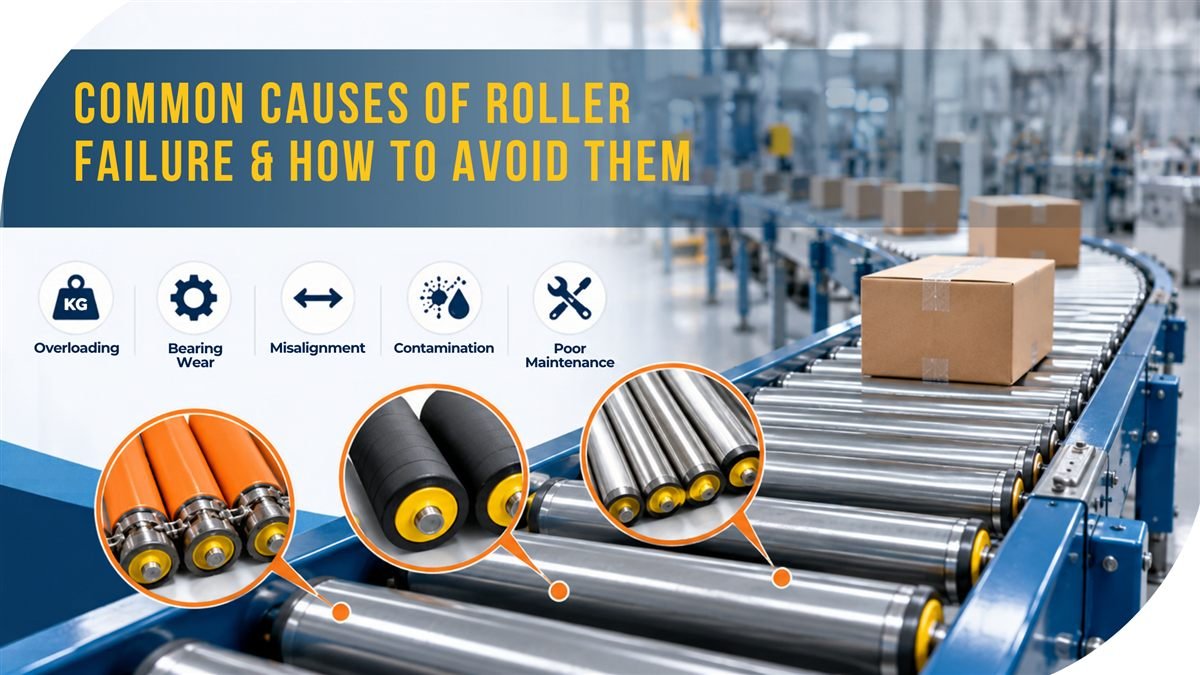
Conveyor rollers play a critical role in ensuring smooth, reliable and efficient material movement across industrial operations. However, factors such as excessive loads, misalignment, bearing wear, contamination and inadequate maintenance can lead to conveyor roller failure.
Understanding the common causes of roller failure can help industries reduce unexpected downtime, improve conveyor performance and extend equipment life.
In this guide, we explore the major causes of conveyor roller problems and practical ways to prevent them.
Common Causes of Conveyor Roller Failure and How to Avoid Them
Conveyor rollers are designed to withstand continuous operation and varying material loads. But even a well-designed conveyor system can experience roller failure if the rollers are incorrectly selected, overloaded, poorly maintained or exposed to harsh operating conditions.
Here are some of the most common causes of conveyor roller failure and how to address them.
1. Overloading the Conveyor Rollers
One of the most common causes of roller failure is excessive load.
Every conveyor roller has a specified load-bearing capacity. When the weight of the conveyed material exceeds the recommended capacity, the roller components can experience excessive stress.
How Overloading Causes Failure
Excessive loads can result in:
- Bearing damage
- Shaft deformation
- Roller surface wear
- Increased friction
- Reduced roller life
- Conveyor belt or material movement issues
How to Prevent Overloading
To reduce the risk of failure:
- Select rollers according to the expected load.
- Consider both static and dynamic loads.
- Distribute material evenly across the conveyor.
- Avoid exceeding the conveyor's rated capacity.
- Review load requirements before modifying the conveyor system.
Proper roller selection at the design stage can significantly improve conveyor reliability.
2. Bearing Wear and Damage
Bearings are essential for allowing rollers to rotate smoothly. Continuous operation, excessive loads, contamination and inadequate lubrication can cause bearings to deteriorate over time.
Common Signs of Bearing Problems
Watch for:
- Unusual noise
- Increased vibration
- Resistance during roller rotation
- Excessive heat
- Irregular roller movement
Ignoring these signs can eventually lead to complete roller failure.
How to Prevent Bearing Failure
Regular inspection can help identify bearing problems at an early stage. Depending on the application, use suitable bearings and ensure they are appropriately protected from dust, moisture and other contaminants.
3. Conveyor Misalignment
Misalignment can place uneven forces on conveyor rollers and other components.
When rollers are not correctly aligned, materials may not travel smoothly through the conveyor system. This can increase friction and cause uneven wear.
How Misalignment Affects Rollers
Misalignment may lead to:
- Uneven roller wear
- Increased vibration
- Material tracking problems
- Bearing stress
- Premature component failure
How to Avoid Misalignment
During installation and maintenance:
- Check roller positioning regularly.
- Ensure conveyor frames are properly aligned.
- Inspect mounting points.
- Look for uneven gaps or abnormal wear patterns.
- Correct alignment issues as soon as they are identified.
4. Contamination from Dust, Dirt and Moisture
Industrial environments can expose conveyor rollers to dust, dirt, water, chemicals and other contaminants.
When contaminants enter bearings or other moving components, they can increase friction and accelerate wear.
Preventing Contamination-Related Roller Failure
Depending on the operating environment, consider:
- Sealed or protected bearing arrangements
- Regular cleaning
- Appropriate roller materials and finishes
- Protection from direct water or chemical exposure
- Routine inspection of rollers and bearings
For applications operating in demanding environments, roller selection should take operating conditions into account, not just load requirements.
5. Poor Roller Selection
Not every conveyor roller is suitable for every application.
Factors such as material weight, conveyor speed, operating environment, temperature, product characteristics and required roller spacing can influence roller selection.
Factors to Consider When Selecting Conveyor Rollers
Before choosing rollers, consider:
- Load capacity
- Roller diameter
- Roller length
- Shaft configuration
- Bearing type
- Conveyor speed
- Material being conveyed
- Operating environment
- Required service life
Choosing the right conveyor rollers can help improve performance and reduce premature failures.
6. Excessive Wear and Corrosion
Continuous operation naturally causes wear. However, harsh operating conditions can accelerate the process.
Corrosion can weaken roller surfaces and shafts, while prolonged wear can affect rotation and load-carrying performance.
How to Reduce Wear and Corrosion
Preventive measures include:
- Regular visual inspections
- Timely replacement of damaged rollers
- Cleaning accumulated material
- Selecting suitable materials and finishes
- Monitoring high-wear areas
- Maintaining the conveyor according to operating requirements
Replacing a worn roller before it fails completely can help prevent unnecessary downtime.
7. Inadequate Conveyor Maintenance
Even high-quality conveyor rollers require appropriate maintenance.
A lack of inspection can allow small issues to develop into larger mechanical problems.
What Should Be Checked During Maintenance?
A basic inspection should include:
- Roller rotation
- Bearing condition
- Unusual sounds
- Vibration
- Surface wear
- Corrosion
- Shaft condition
- Alignment
- Accumulation of dust or material
A structured roller conveyor maintenance routine helps identify potential failures before they disrupt production.
8. Improper Installation
Incorrect installation can reduce the service life of conveyor rollers even when the rollers themselves meet the required specifications.
Improper positioning, incorrect alignment or unsuitable mounting can create unnecessary stress on the roller assembly.
Best Practices for Roller Installation
Ensure that:
- Rollers are correctly positioned.
- Shafts are securely mounted.
- Frames are properly aligned.
- Rollers rotate freely after installation.
- Roller spacing is suitable for the conveyed product.
- Installation follows the conveyor system's design requirements.
Correct installation provides the foundation for reliable conveyor operation.
How to Prevent Conveyor Roller Failure
Preventing roller failure is not limited to replacing damaged components. A combination of proper design, correct roller selection, installation and preventive maintenance can improve overall conveyor performance.
Follow a Preventive Maintenance Schedule
Inspect rollers at defined intervals based on operating conditions and usage.
Monitor Early Warning Signs
Noise, vibration, uneven rotation and visible wear can indicate developing problems.
Choose Application-Specific Rollers
Select rollers based on load, speed, environment and material-handling requirements rather than using a one-size-fits-all approach.
Replace Damaged Rollers Promptly
A damaged roller can affect surrounding components and overall conveyor performance. Timely replacement can help prevent a minor issue from becoming a larger system problem.
Quick Checklist for Conveyor Roller Maintenance
Use this simple checklist during routine inspections:
- Check for unusual roller noise
- Inspect bearings for signs of wear
- Check roller alignment
- Look for corrosion or surface damage
- Check for excessive vibration
- Inspect shafts and mounting points
- Remove accumulated dust and material
- Check whether the conveyor is operating within its rated load
- Replace severely worn or damaged rollers
Regular inspections can help identify conveyor roller problems before they result in unexpected downtime.
Why Proper Conveyor Roller Selection Matters
Rollers are not simply supporting components. They are an important part of the overall conveyor system.
Selecting rollers according to the application's load, speed, environment and material characteristics can contribute to smoother material movement, reduced wear and more reliable operation.
For industries that depend on continuous material movement, investing in appropriately designed conveyor rollers can help support long-term operational efficiency.
Conclusion
Conveyor roller failure can result from several factors, including overloading, bearing damage, misalignment, contamination, improper selection, corrosion, inadequate maintenance and incorrect installation.
The key to preventing these issues is a combination of proper engineering, application-specific roller selection, correct installation and regular preventive maintenance.
By identifying early warning signs and addressing potential problems before failure occurs, industries can improve conveyor reliability and reduce avoidable downtime.
Need the Right Conveyor Rollers for Your Application?
Looking for reliable conveyor rollers designed for your material-handling requirements?
Get in touch with Excel Conveyors for your business requirements.
For business inquiries: sales@econveyors.in
Let's build a conveyor solution that keeps your material moving efficiently. Get in touch with us.